

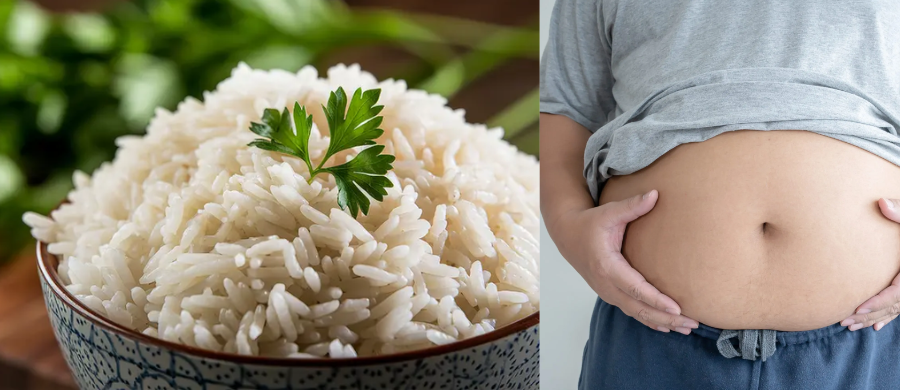
If you’re trying to lose weight or build a lean physique, you’ve probably heard conflicting advice about rice. Some say it’s “bad carbs” that cause weight gain, while others include it daily in fitness meal plans.
Rice doesn’t make you fat. Weight gain happens from excess calories, not one food. Portion size and lifestyle matter most.
Real Cause of Weight Gain
Calories, Not Carbohydrates, Control Fat Gain
The biggest misconception in nutrition is blaming a single food for weight gain. In reality, fat gain happens when you consistently eat more calories than your body burns.
This is called a caloric surplus.
Rice is a carbohydrate source, and carbs often get unfairly blamed. But your body does not automatically turn rice into fat. Instead, it uses carbohydrates for energy first.
Only when you consistently exceed your energy needs does your body store excess calories as fat, regardless of whether those calories come from rice, protein, or fat.
Why Rice Gets the Blame
Rice is:
- Easy to overeat
- Often served in large portions
- Commonly paired with high-calorie sauces or fried foods
So people don’t gain weight from rice alone; they gain weight from total meal patterns and lifestyle habits.
Nutritional Profile of Rice (What You’re Actually Eating)
White Rice Nutrition Overview
White rice is a refined carbohydrate source that provides:
- Fast-digesting carbohydrates (energy)
- Small amounts of protein
- Very low fat
- Minimal fiber (due to processing)
It is not “empty calories,” but it is a quick energy source.
Brown Rice vs White Rice
Brown rice contains:
- Higher fiber content
- Slightly more vitamins and minerals
- Slower digestion rate
This means brown rice may help with satiety and appetite control, while white rice provides faster energy release.
Neither is “bad,” they simply serve different purposes in your diet.
Does Rice Make You Fat? The Science-Based Answer
H3: Rice Alone Cannot Create Fat Gain
Your body does not store food as fat immediately after eating. Instead, it follows a hierarchy:
- Immediate energy needs
- Glycogen storage (muscle + liver energy)
- Fat storage (only when excess remains)
Rice contributes mainly to glycogen replenishment, especially after exercise.
When Rice Can Contribute to Weight Gain
Rice may indirectly contribute to fat gain when:
- Portion sizes are too large
- It is eaten frequently in calorie-heavy meals
- Physical activity is low
- Overall diet exceeds calorie needs
So the issue is not rice, it’s energy imbalance over time.
How Rice Affects Blood Sugar and Insulin?
Glycemic Response Explained
Rice is a carbohydrate, so it affects blood sugar levels. White rice in particular has a higher glycemic index (GI), meaning it raises blood sugar faster than high-fiber foods.
However, this does not automatically mean fat gain.
Insulin Is Not the Enemy
Insulin helps move glucose from the bloodstream into cells for energy or storage. Many people misunderstand insulin and think it “creates fat instantly.”
In reality:
- Insulin helps regulate energy use
- Fat storage only happens when calorie intake is consistently high
- Exercise improves insulin sensitivity
So rice affects blood sugar, but context matters more than one food alone.
Portion Size Is the Real Game Changer
Why Rice Becomes Problematic in Large Quantities
One of the biggest reasons rice gets linked to weight gain is portion distortion.
A healthy serving of rice can fit into a balanced diet. But many people eat:
- 2–3 cups per meal
- Large restaurant portions
- Rice combined with fried toppings or creamy sauces
This quickly increases total calorie intake.
Visual Portion Control Tips
A practical approach:
- 1 cupped hand = small portion
- 1 fist = moderate serving
- Plate balance = half vegetables, quarter protein, quarter carbs
This helps keep rice in a fat-loss-friendly structure.
Rice and Metabolism – What Really Happens in Your Body
Carbohydrates as Energy Fuel
Rice is primarily used for:
- Brain function
- Muscle performance
- Daily energy needs
If you are active, rice actually supports metabolism by fueling movement and workouts.
Glycogen Storage and Physical Activity
When you eat rice:
- It is converted into glucose
- Stored as glycogen in muscles and the liver
- Used during exercise and daily activity
If glycogen stores are full and calorie intake is still high, excess energy may be stored as fat.
This is not unique to rice it applies to all macronutrients.
Can You Eat Rice and Still Lose Weight?
Yes, Rice Can Fit Into a Fat-Loss Diet
Weight loss diets often include rice because:
- It is filling when paired with protein and fiber
- It provides training energy
- It helps maintain dietary consistency
Many athletes and bodybuilders eat rice daily while staying lean.
The Key Is Meal Composition
A fat-loss-friendly rice meal should include:
- Lean protein (chicken, fish, eggs, tofu)
- Fiber-rich vegetables
- Controlled portion of rice
- Minimal added oils or sauces
This combination slows digestion and improves fullness.
Healthier Ways to Eat Rice Without Gaining Fat
1. Pair Rice with Protein
Protein reduces hunger and stabilizes blood sugar. Good combinations include:
- Rice + grilled chicken
- Rice + lentils (dal)
- Rice + eggs or tofu
2. Add Fiber-Rich Vegetables
Vegetables increase meal volume without adding many calories:
- Broccoli
- Spinach
- Carrots
- Beans
3. Choose Cooking Methods Wisely
Avoid:
- Fried rice with excess oil
- Creamy sauces
- Butter-heavy recipes
Prefer:
- Steamed rice
- Boiled rice bowls
- Light seasoning
Time Your Rice Intake
Rice is most beneficial:
- Before workouts (energy)
- After workouts (recovery)
- During active parts of the day
Avoid large rice-heavy meals before long inactivity.
Common Myths About Rice and Weight Gain
Myth 1 – “Eating Rice at Night Makes You Fat”
Fat gain is not time-dependent. It depends on total daily calories, not meal timing alone.
Myth 2 – “White Rice Is Always Bad”
White rice is simply less fibrous, not unhealthy. It can be part of a balanced diet.
Myth 3 – “Rice Must Be Avoided for Weight Loss”
Many successful fat-loss diets include rice in controlled portions.
Final Verdict – Does Rice Make You Fat?
The Truth You Need to Remember
Rice does NOT make you fat by itself.
What actually causes weight gain is:
- Excess calorie intake
- Sedentary lifestyle
- Poor portion control
- Unbalanced meals
Rice is simply a carbohydrate source that provides energy.
Smart Approach to Eating Rice
If your goal is fat loss or lean muscle:
- Control portions
- Combine with protein and vegetables
- Stay physically active
- Track overall calorie intake
When used correctly, rice is not your enemy it is a useful, energy-rich food that can support performance and even weight loss.
References
- USDA FoodData Central – White Rice Nutrition
https://fdc.nal.usda.gov/ - World Health Organization – Healthy Diet Factsheet
https://www.who.int/news-room/fact-sheets/detail/healthy-diet - Mayo Clinic – Calories and Weight Control
https://www.mayoclinic.org/healthy-lifestyle/weight-loss/in-depth/calories/art-20048065 - National Institute of Diabetes and Digestive and Kidney Diseases (NIDDK) – Weight Management
https://www.niddk.nih.gov/health-information/weight-management